

Pūweto Confirmed Across Auckland Sites; New Biodiversity Focus Area Identified on Aotea
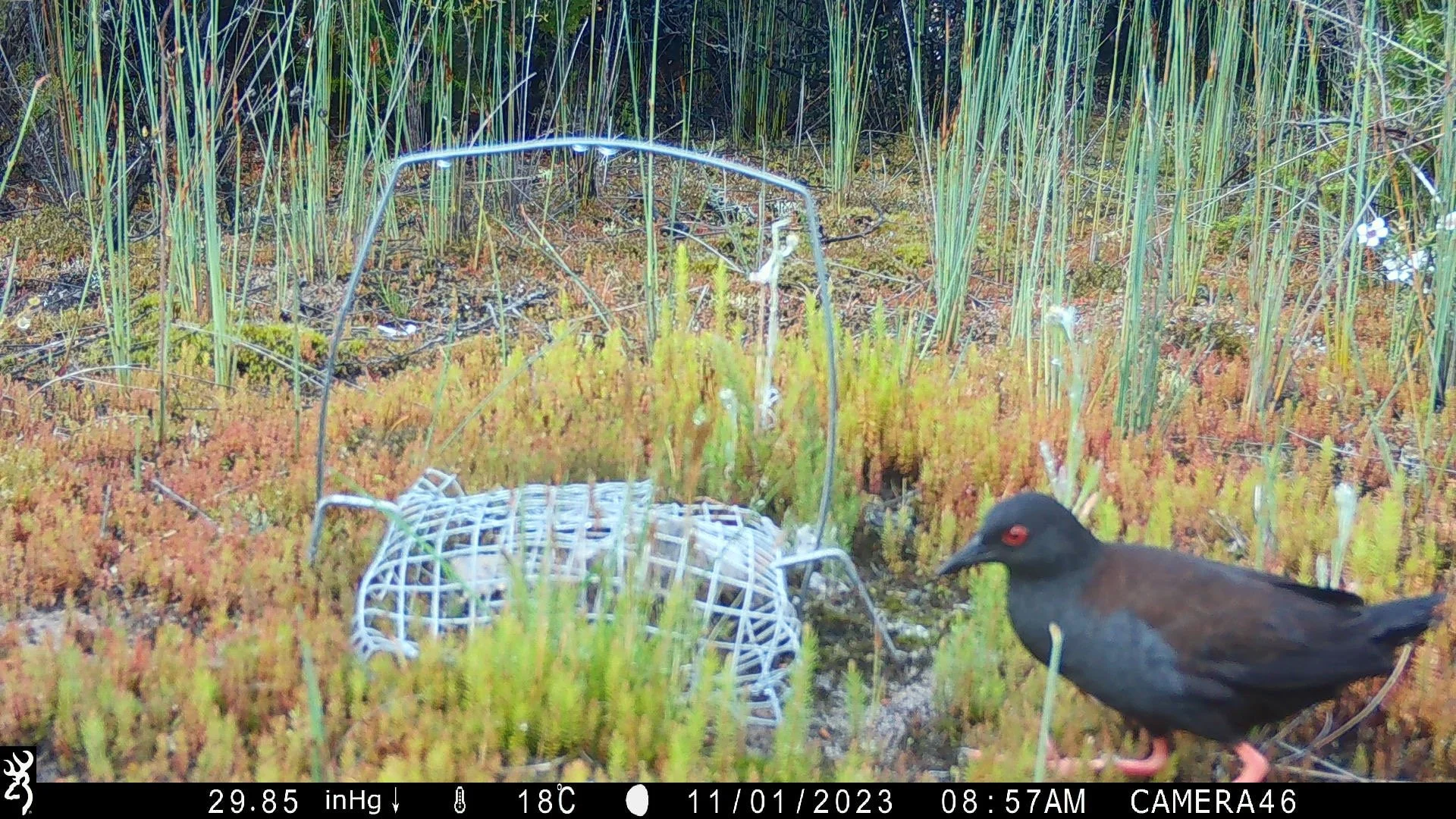
Photo: Envirokiwi Ltd - Pūweto, Spotless crake recorded in 2023
Autonomous Acoustic Crake Survey – Key Findings for 2025
Auckland Council has released results from the 2025 autonomous acoustic survey for kotoreke/marsh crake and pūweto/spotless crake, carried out across Aotea/Great Barrier Island, Whatipū, Awhitu, and Tupare. The survey used 66 autonomous recorders to better understand distribution and support Biodiversity Focus Area (BFA) mapping for these cryptic wetland birds.
Key Results
Pūweto were detected at all four sites, with strongest detections at Kaitoke–Medlands on Aotea.
A new pūweto Biosecurity Focus Area (BFA) is recommended for Kaitoke–Medlands, based on multiple detections across its wetlands.
Kotoreke were not detected at any site during this early-summer survey.
Whatipū North is not recommended for pūweto BFA status at this time.
Matuku-hūrepo (bittern) were incidentally detected at Aotea, Whatipū, and Awhitu.
“Pūweto detection rates were substantively higher at both reference and survey sites this year…” (from the Summary)
What the Results Mean
Kotoreke absence is inconclusive – the species is highly cryptic and may call more frequently in early spring. A wider landscape-scale survey is recommended for 2026.
Pūweto activity rebounded strongly compared with 2024, highlighting the importance of multi-year monitoring.
Predator control remains important, with cats still present at some sites.
Recommendations
Establish a new pūweto BFA at Kaitoke–Medlands (Aotea).
Do not establish a pūweto BFA at Whatipū North.
Undertake a coordinated kotoreke survey across the West Coast wetlands (South Kaipara to South Whatipū) in early spring 2026.
Figure 1: Front cover of report.
